AppSec Research creates a challenge to the public to find a web app vulnerability to uncover the hidden message. The vulnerable webpage is located here.
Update: Solution posted here. I will try out the steps during the Xmas long weekend.

File recovery
Ever deleted a file by accident? Well... you don't need to be a forensics guru to reclaim the deleted file.
From the genuises who created, CCleaner, comes Recuva... a portable tool that you can copy to a flash drive and insert into any machine to recover lost files. This is ideal compared to installing recovery tools as it reduces the risk of accidentally writing over files that you wish to repossess.
In my demo, my "Recycle Bin" is emptied. I launch Recuva Portable and initiate a scan of my local drive. It displays a deleted file for restoration. Upon recovery, I am able to view my original data.


You need administrative access to the target system in order to scan for deleted files. On the flip side, this exercise shows how rudimentary it is to recover files and thus you need to protect your privacy by wiping files that you no longer need. Eraser is the solution for you.

From the genuises who created, CCleaner, comes Recuva... a portable tool that you can copy to a flash drive and insert into any machine to recover lost files. This is ideal compared to installing recovery tools as it reduces the risk of accidentally writing over files that you wish to repossess.
In my demo, my "Recycle Bin" is emptied. I launch Recuva Portable and initiate a scan of my local drive. It displays a deleted file for restoration. Upon recovery, I am able to view my original data.


You need administrative access to the target system in order to scan for deleted files. On the flip side, this exercise shows how rudimentary it is to recover files and thus you need to protect your privacy by wiping files that you no longer need. Eraser is the solution for you.

NeXpose Metasploit integration
 With Rapid7's funding of Metasploit, both NeXpose and Metasploit are seamlessly integrated to automatically scan and remotely exploit target machines. Far out!!! I ran the plugin to successfully exploit my vulnerable virtual machine.
NeXpose vs Nessus
I've used Nessus for years. I only recently heard of NeXpose after Rapid7 started funding Metasploit and promised to integrate their scanner with Metasploit. I decided to give NeXpose a whirl. The learning curve wasn't steep when using the scanner.

 Scanned the same target machine with Nessus.


 The 2 scanners produce the same result but I always believe in the need to use multiple tools to assess vulnerabilities in infrastructures, networks, systems and applications to uncover the full state of insecurity.


ThreatExpert
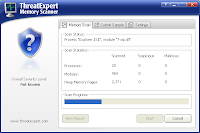
Found out about this resource from attending a Symantec security seminar today. ThreatExpert provides a list of free services including a "Memory Scanner". This tool scans your memory for malware. Users can submit suspicious files for analysis to discover the file's behaviour without having to execute it.


Code injection via English text?
Session video recording vs keystroke logging
Visually, it is easier to comprehend what is occurring during a session when reviewing a recording as compared to keystrokes. However, recordings consume a lot of storage and cannot be indexed for easy searching unlike keylogging. Session video recording is more secure as it does not record the privilege password. It is also less intrusive because no software or tweaking is required on the endpoint system.
The jury is still out on session video recording. It is a good concept but its disadvantages currently outweigh its benefits.
The jury is still out on session video recording. It is a good concept but its disadvantages currently outweigh its benefits.
Network forensics puzzle #2
My answer to the new digital forensics puzzle. I ran "ngrep" in Ubuntu to search for lines containing the "@" symbol. Ann's email address is "sneakyg33k@aol.com". Her secret lover's email address is "mistersecretx@aol.com". She requests him to bring his fake passport and bathing suit.
Searching for strings matching "aol.com" reveals "AUTH=LOGIN". I locate the login sequence in Wireshark.
 I figure that the string "VXNlcm5hbWU6" is encoded and has signficance. Googling this string reveals that it is "Username:" encoded in Base64. I use the "Enocde/Hash" tool in Paros (Windows) to confirm this fact. Lo and behold! I start to decode the other encoded strings to reveal the password "558r00lz".


To locate the attachment that Ann sent, I search for the string "Content-Type:". The name of the attachment is "secretrendezvous.docx". I usually like to challenge myself by manually carving out file transfers but in this specific case, I was unsuccessful. Using file carvers like "tcpxtract" and "Foremost" also resulted in failure. I resorted to using NetMiner (Windows) to acquire this file.
 I do not have Office 2007 installed on my laptop. I decided to be creative and viewed the file in Google Docs to reveal their secret meeting place. The MD5 hash of this file is "9e423e11db88f01bbff81172839e1923". To access the embedded image, I rename the extension ".docx" to ".zip". I am able to access the image from the "/word/media/" folder. The MD5 hash of this image is "aadeace50997b1ba24b09ac2ef1940b7".


Searching for strings matching "aol.com" reveals "AUTH=LOGIN". I locate the login sequence in Wireshark.
 I figure that the string "VXNlcm5hbWU6" is encoded and has signficance. Googling this string reveals that it is "Username:" encoded in Base64. I use the "Enocde/Hash" tool in Paros (Windows) to confirm this fact. Lo and behold! I start to decode the other encoded strings to reveal the password "558r00lz".


To locate the attachment that Ann sent, I search for the string "Content-Type:". The name of the attachment is "secretrendezvous.docx". I usually like to challenge myself by manually carving out file transfers but in this specific case, I was unsuccessful. Using file carvers like "tcpxtract" and "Foremost" also resulted in failure. I resorted to using NetMiner (Windows) to acquire this file.
 I do not have Office 2007 installed on my laptop. I decided to be creative and viewed the file in Google Docs to reveal their secret meeting place. The MD5 hash of this file is "9e423e11db88f01bbff81172839e1923". To access the embedded image, I rename the extension ".docx" to ".zip". I am able to access the image from the "/word/media/" folder. The MD5 hash of this image is "aadeace50997b1ba24b09ac2ef1940b7".

My new article
Password length
Interesting statistics but I wonder how reliable the source is. It is fascinating the difference and benefits that passwords with a length of 12 yields over those with 11.
Subscribe to:
Posts (Atom)
-
This annoying message popped up after I ran the update in avast! in Ubuntu yesterday. avast! crashes every time I attempt to launch it after...
-
 I decided to install a digital certificate for my Gmail account. This is simple and free to set up. Apply for a free certificate from Comod...